
In my 21 years as an FBI Special Agent, I often faced an extremely frustrating challenge. In criminal, counterterrorism, and weapons of mass destruction investigations, my teams and I had mountains of evidence with which to work—but the manual review process was painfully slow.
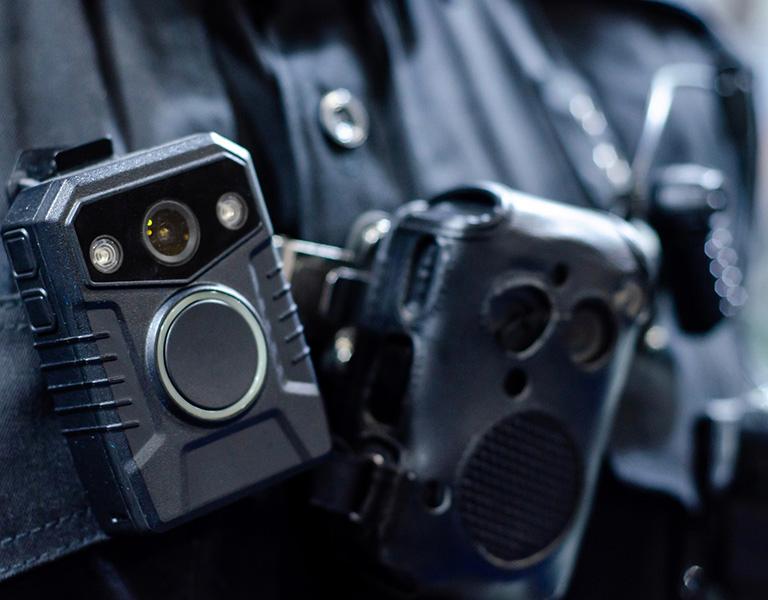
Today, this challenge has intensified significantly. Federal investigators are collecting an unprecedented amount of data: social media account contents, smartphone and computer contents, surveillance video, photographs, call detail records, body cam footage, and other digital evidence. The volume of evidence is overwhelming. But there are still statutory and policy requirements to review all of this evidence. These resources are only useful if we can find what we need quickly and analyze it accurately.
That’s where Veritone Investigate comes in. Powered by Veritone’s aiWARE platform, Veritone Investigate helps federal law enforcement agencies turn large volumes of digital evidence into searchable, actionable information. Rather than spending days or weeks manually reviewing hundreds of hours of audio,video, images, and documents, investigators can use Veritone Investigate to quickly search across large collections of data for potentially relevant information.
By making content that was once difficult to search—like surveillance footage, reports of investigative activity, and interview recordings—far more accessible, federal investigators can not only find the evidence they need much more quickly, they can also uncover connections that would have been nearly impossible to make through human analysis alone.
It’s truly like a highly sophisticated “Control+F” shortcut for investigative content.
Making time for the work only investigators can do
For federal law enforcement, the value of this technology is more than just speed for speed’s sake. It’s the ability to focus limited personnel on the work that requires their expertise.
Manual media review is among the most resource-intensive parts of a modern investigation. Transcribing a single minute of audio typically takes six minutes of an investigator’s time when they need to pause, rewind, document, and confirm what they heard. The same challenge applies to video: reviewing lengthy surveillance files, body-camera footage, or public-submitted media frame by frame can pull agents and analysts away from other important case requirements.
Veritone Investigate helps reduce that burden. AI-assisted transcription, visual search, optical character recognition, and object recognition can help agencies search large collections for relevant terms, text, vehicles, license plates, and other details. Investigators can then prioritize the content most likely to be relevant and review the original material in context.
The benefits extend well beyond a single case. When highly trained personnel spend less time on repetitive review, they can devote more time to pursuing leads, conducting interviews, building cases, and responding to urgent threats. It gets them out from behind a desk and back to the mission.
Built for oversight, evidence integrity, and trust
When it comes to AI, trust and governance are paramount, and this is especially true for federal agencies, where evidentiary integrity, transparency, and accountability are non-negotiable table stakes. However, confusion between different types of AI can often create a barrier to adoption. There’s a major difference between generative AI, which can create new content (and is prone to hallucinations), and AI for securely searching and organizing existing information.
Veritone designed its AI to help agencies work with data they control. It does not create, manufacture, or alter evidence. It does not collect information from the web or conduct open-source collection on an agency’s behalf. By design, Veritone’s solutions are incapable of collecting new data. Agencies use Veritone to process and analyze their own existing files. The platform helps make those files searchable and usable.
The role of Veritone’s technology is to surface potentially relevant information—not to make investigative decisions or reach conclusions on behalf of an investigator. Human oversight and control remains central to the workflow. Investigators initiate and direct the search, evaluate the results, and return to the original audio, video, image, or document to validate what the technology has identified. This supports the fact-based process at the core of law enforcement: gathering information, verifying it, and determining whether it can support an investigation or prosecution.
For agencies, the standard should not be “take our word for it.” It should be the ability to see how a result was generated, assess it against the underlying media, and replicate the search themselves. This transparency can help support the rigorous expectations surrounding chain of custody, discovery, and evidentiary review.
Designed around operational requirements
Technology is most effective when it is built for the requirements of the people who need it. Veritone incorporates input from current and former law enforcement officers to ensure its capabilities address mission needs.
Geospatial information is one example. Investigators often receive data from cell site records, tracking devices and other sources as sprawling spreadsheets of latitude and longitude coordinates. The information can be highly valuable, but it is difficult to interpret in raw form. By helping transform location data into map-based visualizations and timelines, technology can make movements, patterns, and connections easier to understand.
The same principle applies across investigative media. A useful platform should help agencies translate overwhelming volumes of raw information into usable information, while respecting the operational, legal, and evidentiary requirements of federal law enforcement.
Federal investigators do not lack data. They lack tools that help them find what matters quickly and act on it decisively. That is how Veritone Public Sector is helping agencies turn otherwise overwhelming amounts of data into searchable and usable information—enabling investigators to spend less time on manual review and more time on the investigative work that demands their expertise.
Further Reading
Modernizing Investigations with AI-Powered Document Analysis
How AI Is Helping Solve Cold Cases: Insights From Law Enforcement Experts
The Future of Evidence Management: AI Solutions for Law Enforcement