
If you work in a creative field, whether you’re a copywriter, a video editor, a graphic designer, or a brand strategist, you’ve probably been feeling anxiety from every conversation about generative AI. The tools are getting better, faster, and cheaper by the month. The question of whether AI will replace creative professionals isn’t theoretical anymore—it’s personal.
This anxiety deserves to be taken seriously rather than dismissed with tech-optimist platitudes. But the more pressing question for creative leaders right now isn’t whether AI will change how their teams work. It already has. The real question is: who will be in charge of that change?
If your organization gets it right, it will be the human creatives. AI’s greatest potential is its ability to empower; the challenge lies in managing it in a way that amplifies human talent rather than sidelines it. And that management challenge is one of the most significant opportunities creative leaders will face in this decade.
From operational tool to creative enabler
For a long time, AI in the enterprise was primarily an operational story. That era is over. Generative AI has crossed into the creative domain with remarkable force, offering tools that can draft campaign copy, generate image concepts, and personalize content at a scale no human team could manage manually. But this potential can only be unlocked if you have a framework designed to keep AI serving the creative vision, not running in an ungoverned direction.

Consider a marketing manager who spends her days juggling video files, ad copy, and social media assets. Her team is creating more content than ever, but it’s scattered across different platforms and storage systems, making it nearly impossible to manage, let alone govern.
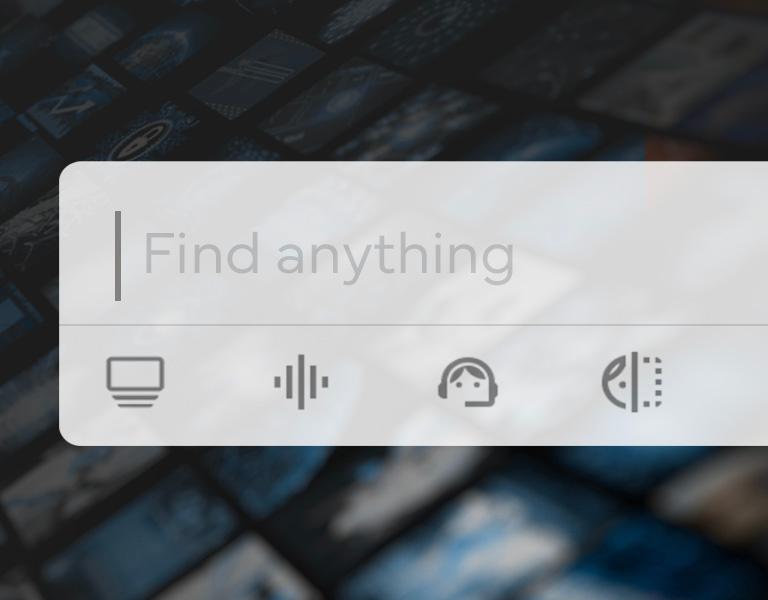
This is precisely why a centralized platform like the Veritone Digital Media Hub (DMH) can serve as the core infrastructure for creative and marketing organizations. Rather than deploying individual AI tools in silos, DMH provides a central, AI-powered environment to organize, search, share, and manage a growing library of multimedia content. It gives creative leaders in businesses of all sizes tools that can help improve control, visibility, and accountability across their AI-assisted workflows.
The human-in-the-loop: keeping creatives in the driver’s seat
For all its power, AI can’t replace the presence and perspective of humans. It can’t feel the shift in a room when a story lands wrong. It can’t recognize that a campaign concept is technically perfect but emotionally hollow. It doesn’t know when to break the rules because the moment calls for it.
What AI can do is handle the scaffolding so human storytellers can focus on work that resonates. In practice, the human-in-the-loop model divides creative work like this:
- AI handles drafts, variations, rough edits, and data-driven recommendations at a volume and speed human teams can’t match.
- Humans then layer in vision, strategy, emotional intelligence, brand instinct, and the final creative judgment call.
This model works only when ethical guardrails are in place. Governance means defining what content AI can draw from, what it cannot generate, and how outputs are reviewed before they go anywhere.
DMH is a great example of what this looks like in practice. Built on Veritone’s aiWARE platform, it uses AI to tag, index, and surface content from vast libraries of video, audio, and media assets. That way the storyteller can focus on shaping those assets into something meaningful with greater visibility into whether available assets are approved, on-brand, and ready for review.
A new playbook for creative leadership in the AI era
Managing a creative team has always required artistic sensibility and operational discipline. AI adds a third dimension: managing the human-machine collaboration itself.
This is new territory, and it carries a steep learning curve. But leaders who get it right may be better positioned to produce more, iterate faster, and tell better stories because their human talent isn’t buried in mechanical work. Here’s what that playbook looks like:
Accountability at the top
Leaders are responsible for what their teams produce with AI, which means establishing review processes to catch copyright risks before they become legal problems. Veritone Generative AI addresses this by grounding generated content in a company’s own trusted data sources. A marketing team can generate ad copy or synthetic voiceovers knowing the AI is working from brand-safe material, not scraping the web. The creative director still makes the call; the platform helps teams work from approved, brand-controlled source material for legal and ethical review.
Culture that empowers
How a leader introduces AI to a creative team matters enormously. Frame it as a toolkit that frees the team from tedious, repetitive work, giving them more capacity for the work they love, and adoption will follow. Deploy it without transparency or training, and resistance will undermine the investment.
Ongoing adaptation
The AI landscape is evolving faster than any roadmap can predict. A recent study published by BCC Research LLC projects the AI agent market will grow from around $8 billion in 2025 to $48.3 billion by the end of 2030, a CAGR of 43.3%.
What your tools can do today will look modest in two years. Creative leaders need to build a culture of responsible experimentation, constantly learning and testing while reinforcing that the human remains the ultimate creative authority.
The future is human-led and AI-powered
Generating content has never been the hard part. The hard part is knowing what to say, why it matters, and how to say it in a way that moves people. Those remain the irreplaceable human elements of storytelling.
A recent Gallup analysis found little evidence so far that generative AI has broadly reduced artists’ earnings, while worker-level data showed total hours worked rising beginning in 2022 and remaining elevated through 2024. The analysis suggests that AI is changing how creative work is organized rather than eliminating the need for human creative judgment.
The organizations that take the lead will be those with the governance to unleash AI’s power efficiently and responsibly—investing in the platforms and cultural practices that keep human storytellers in charge. Veritone Digital Media Hub, powered by aiWARE and its suite of generative AI tools, can provide the unified infrastructure to support that model.
The future of creative work is human-led and AI-powered. The leaders who internalize that distinction—and build their teams around it—will be the ones who define the era.
Learn more about Veritone Digital Media Hub below and unlock the busy work that holds you back from reaching your full creative potential.
Sources:
https://www.bccresearch.com/pressroom/ait/ai-agents-market-to-grow-433-annually
https://www.gallup.com/workplace/708575/ai-changing-creative-work-arts-arent-disappearing.aspx